Watering Methods Beginners Rarely Fail With
Watering is the most confusing part of houseplant care for beginners. Many people believe plants die because they didn’t receive enough water, but in reality, the opposite is usually true.
In this article, we will focus on simple and reliable watering methods that help beginners avoid common mistakes and build confidence.
Why Overwatering Is More Dangerous Than Underwatering
Most indoor plants can recover from short periods of dryness, but very few can survive constantly wet soil. When roots sit in water for too long, they lose access to oxygen and begin to rot.
This is why watering “a little every day” often leads to weak plants, yellow leaves, and slow growth.
The Finger Test: A Beginner’s Best Tool
One of the easiest and most reliable watering methods is the finger test. Simply insert your finger about 2–3 centimeters into the soil.
- If the soil feels dry, it is time to water
- If the soil feels moist, wait a few more days
This method works well for most common houseplants and removes the guesswork from watering.
Water Thoroughly, Not Frequently
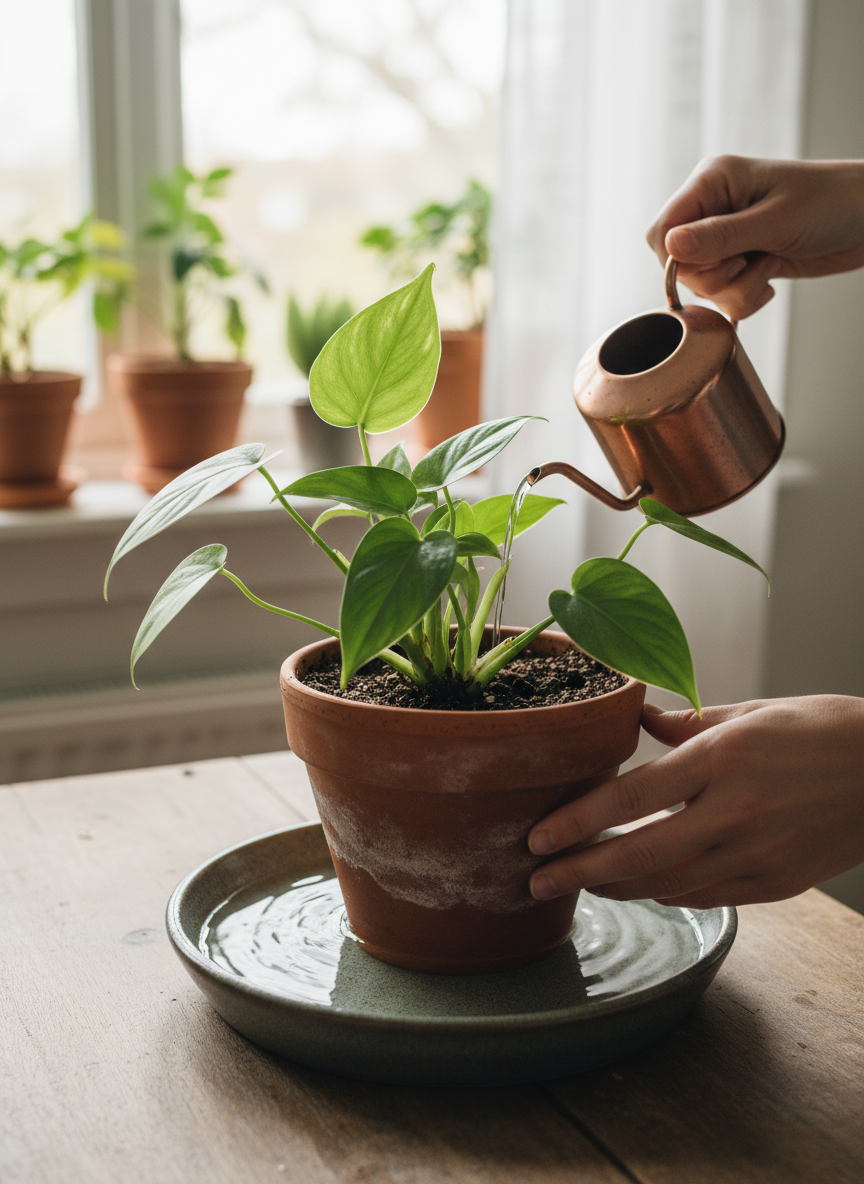
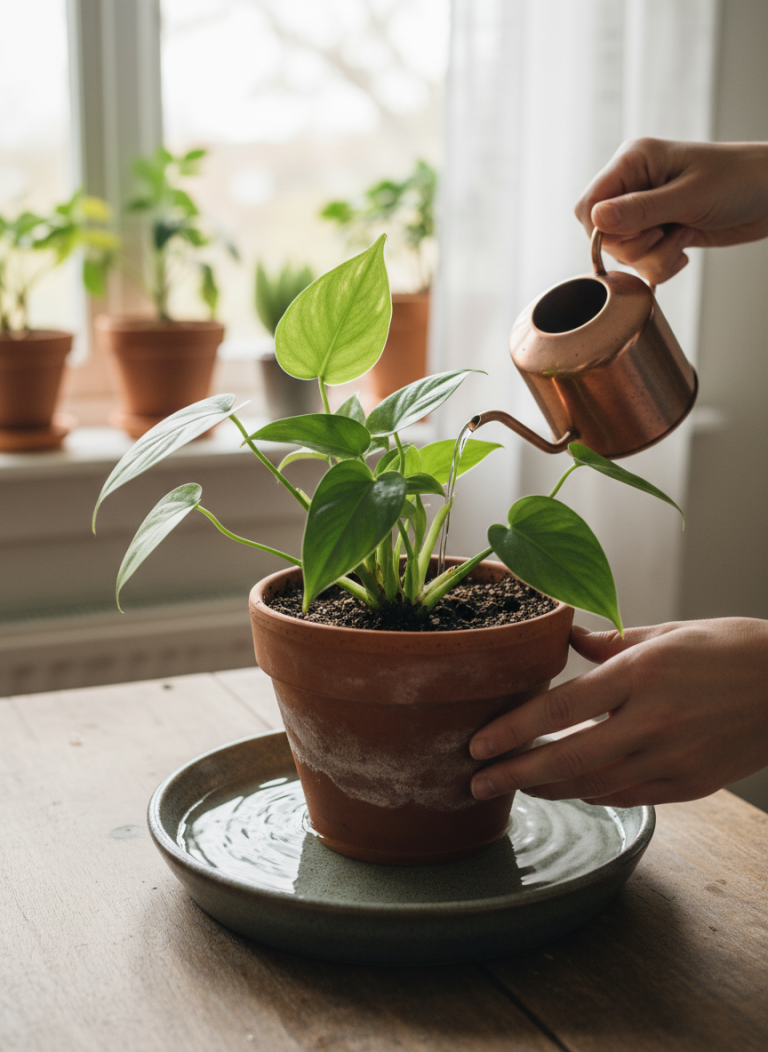
Instead of watering small amounts often, it is better to water thoroughly. This means adding water until it flows out of the drainage holes at the bottom of the pot.
Thorough watering encourages roots to grow deeper and stronger, making the plant more resilient over time.
Understand That Watering Needs Change
Beginners often make the mistake of watering on a fixed schedule. However, plants need different amounts of water depending on the season, temperature, and light conditions.
During colder months or in low-light environments, plants use less water. Adjusting your watering habits based on these changes is essential.
Use Pots With Proper Drainage
No watering method can save a plant if excess water has nowhere to go. Pots without drainage holes trap water at the bottom, increasing the risk of root rot.
If you use decorative pots, always place the plant in a plastic nursery pot inside, allowing excess water to drain safely.
Watch the Leaves, Not the Calendar
Plants give clear signals when their watering needs are not met. Soft, drooping leaves often indicate thirst, while yellow or mushy leaves can signal overwatering.
Learning to observe these signs is far more effective than following a strict watering schedule.
Conclusion: Simple Habits Lead to Healthy Plants
Successful watering is not about complex techniques. It is about observing, adjusting, and responding to your plant’s needs.
In the next article, we will discuss why choosing the right pot and soil matters more than most beginners realize.




 English